6 Testing Personas (Article) EN
Personas are fictitious characters created initially in marketing in order to represent a specific demographic group. This tool allows the marketers to segment the market and customize the specific offerings to specific target segment.
This tool or concept has found its way into areas beyond marketing and you probably have contacted with it before.
Normally personas are a good thing because they represent our users.
In her recent book The Complete SW Tester, Kristin Jackvony uses a very interesting analogy using personas applied to Testing.
Unlike the user or product personas, these testing personas are not a good thing but represent behaviors we want to avoid!
The concept resonated with me and I thought it would be interesting to illustrate it because I am a firm believer in the moniker "A Picture is worth a thousand words."
So the challenge for me was to write 1000 Words and create 1 picture that represents them.
Let's start with the picture!
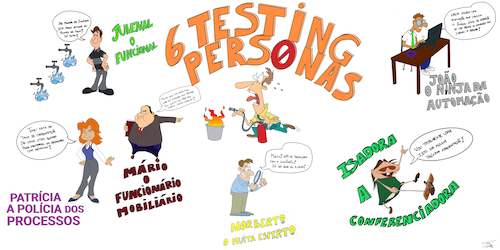
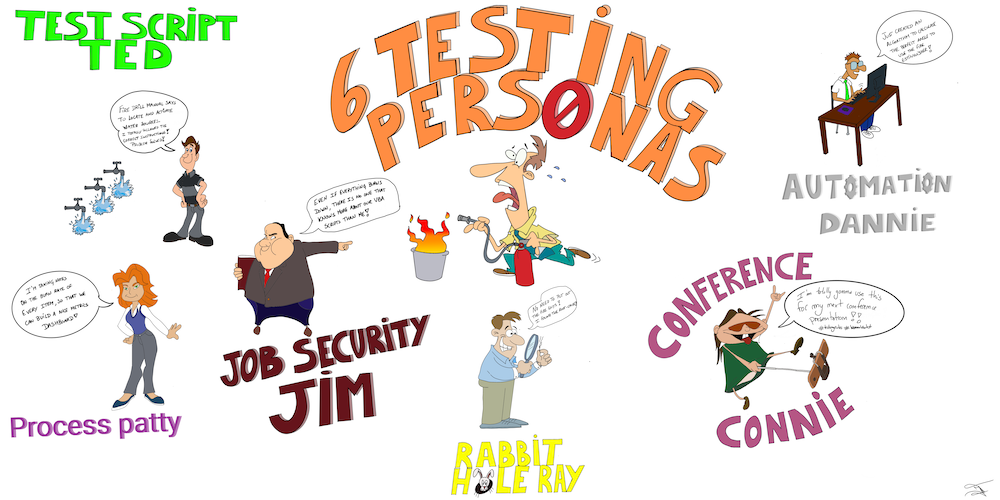
So who are the Testing Personas? Do you recognize them?
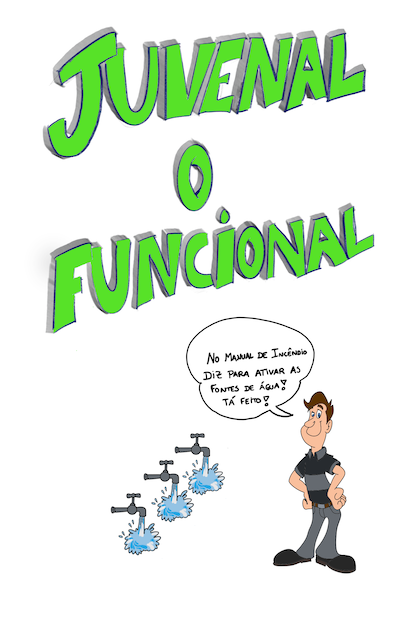
Persona 1: Juvenal o Funcional or Test Script Ted
Juvenal loves running manual test scripts and checking them off when they’re completed. It gives him a feeling of satisfaction to see tests pass. He doesn’t particularly care whether he doesn’t understand how his application works; he’s just satisfied to do what he’s told. But because he doesn’t understand how the application works, he sometimes misses important bugs. If he sees something strange but it’s not addressed in the test plan, he just lets it slide. His job is to test, not figure things out!

Persona 2: João, o Ninja da Automação or Automation Dannie
João considers himself an automation engineer. He thinks manual testing is a colossal waste of his time. He’d rather get into the hard stuff: creating and maintaining automated tests! When a new feature is created, he doesn’t bother to do any exploratory testing; he’ll just start coding, and he figures his great automation will uncover any issues.


What Juvenal and João have in common:
They are making the same mistake for different reasons; they are not taking the time to really learn how their application works. They’re both missing bugs because of a lack of understanding; Juvenal does not understand the code that makes the features work and João doesn’t understand the application’s use cases.
How not to be Juvenal or João:
To be a thorough tester, it’s important to take the time to understand how your features work. Try them out manually; explore their limits. Look at the code to see whether there are other ways you might test the features.
Ask questions when you see things that don’t make sense.
Persona 3: Patrícia, a Polícia dos Processos or Process Patty
Patricia is passionate about quality. She likes things to work correctly. But she likes having processes and standards even more! She’s got test plans and matrices she’s expecting her team to follow precisely. Regression testing must be completed before any exploratory testing is done, and there are hundreds of regression tests to be run. The trouble is, with releases happening every two weeks there’s no time to do any exploratory testing. There’s no time to stop and think about new ways to test the product, or what might be missing. The team needs to get all those regression tests completed!


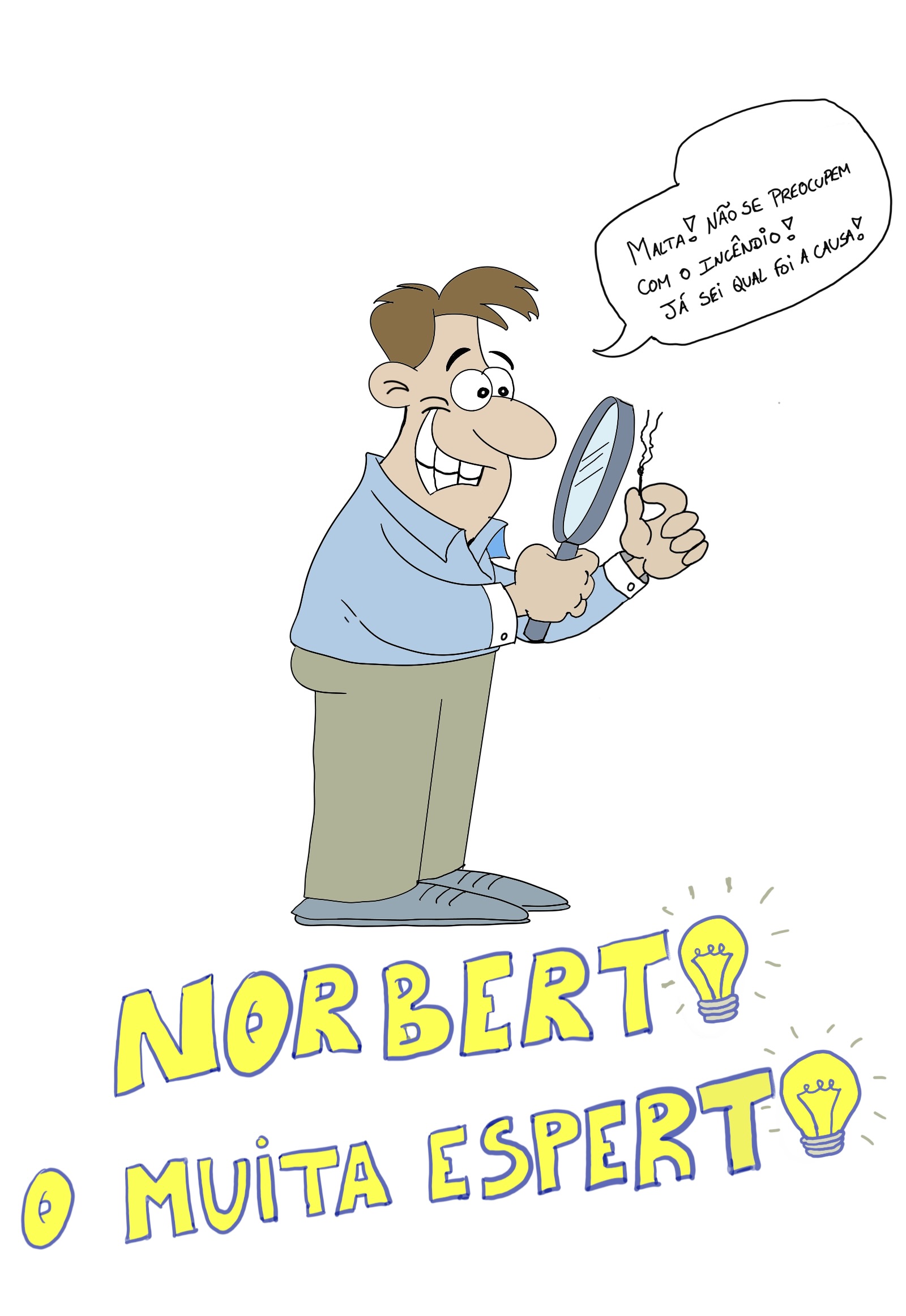
Persona 4: Norberto, o Muita Esperto or Rabbit Hole Ray
Norberto is passionate about quality too; he doesn’t want any bug to go unnoticed. So when he sees something strange in the application when it runs on IE10, he’s determined to find out what’s wrong! He will take days to investigate, looking at logs and trying different configuration scenarios to reproduce it. He doesn’t want to be bothered with the standard regression tests that he’s leaving undone as the feature is being released. And he doesn’t care that only .05% of their customers are using IE10. He’s going to solve the mystery!

What Patricia and Norberto have in common:
They are both wasting time. They are focused on something other than the primary objective: releasing good software on time with a minimum of defects. Patricia is so caught up in the process that she doesn’t see the importance of exploratory testing, which could find new bugs. And Norberto is so obsessed with that elusive bug he’s exploring that he’s ignoring important testing that would impact many more users.
How not to be Patricia or Norberto:
When testing a new feature or regression testing existing ones, it’s important to think about which tests will have the biggest impact and plan your testing accordingly.
Be careful not to get too caught up in processes, and if that elusive bug you’re searching for won’t be that impactful to end users, let it go.
Persona 5: Mário, o Funcionário Mobiliário or Job Security Jim
Mário’s been working at his current position for years. He knows the application like the back of his hand. He’s the go-to guy for all those questions about how the most ancient features behave. He knows there’s no way the company will let him go; that would mean they’d lose all his knowledge! So he doesn’t feel like there’s any reason to learn new skills. What he knows has served him just fine so far. Who needs to waste time after work learning the latest programming language or the newest testing tool?


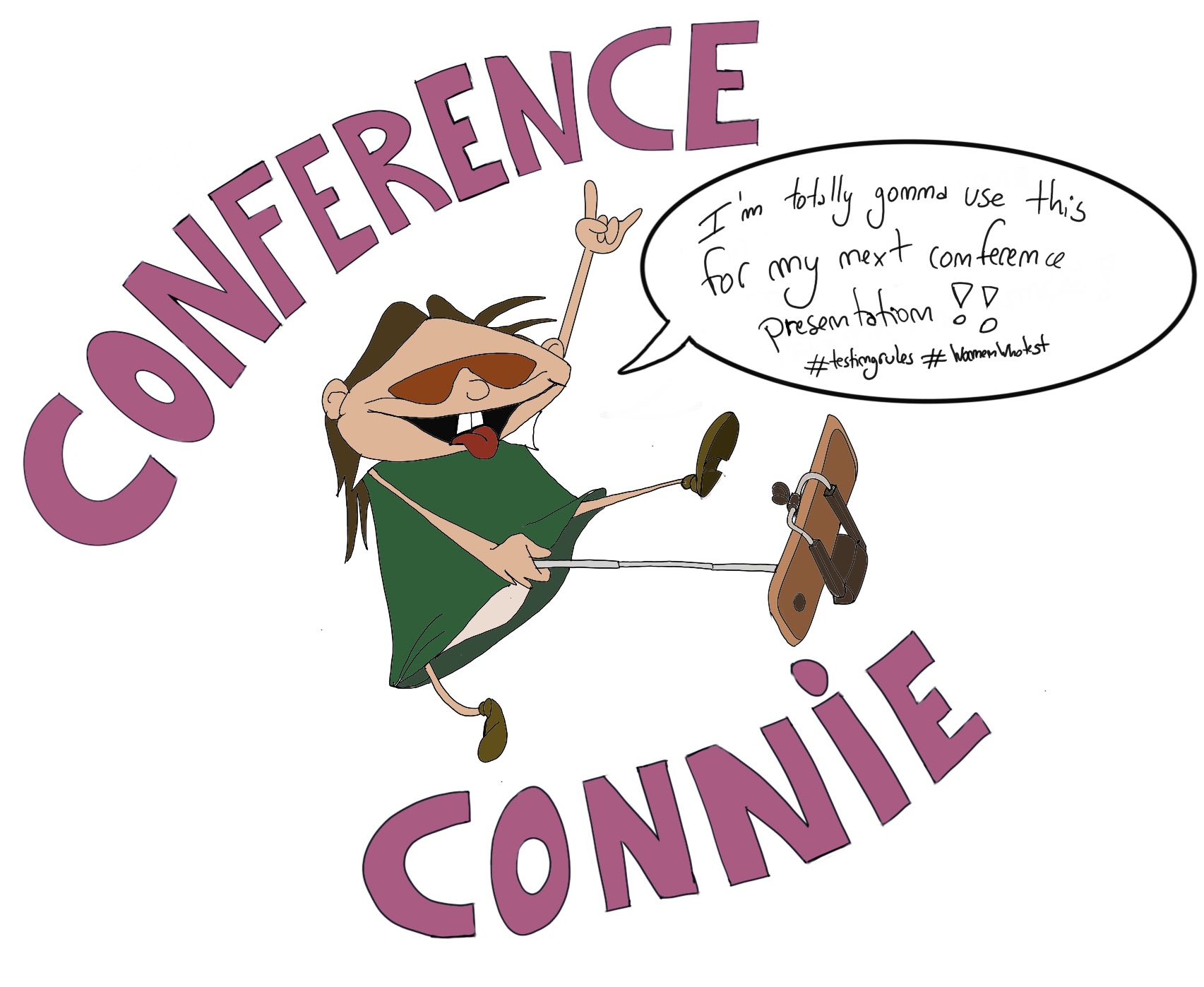
Persona 6: Isadora a Conferenciadora or Conference Connie
Isadora is so excited about tech! She loves to hear about the latest testing techniques and development trends. She signs up for webinars, goes to conferences, reads blog posts, and takes courses online. She knows a little about almost everything! But she has never actually implemented any of the new things she learns. She’s so busy going to conferences and webinars that she barely has time to do her regular testing tasks. And besides, trying things out is a lot of work. It’s easier to just see how other people have done it.

What Mário and Isadora have in common:
They seem like total opposites at first: Mário doesn’t want to learn anything new and Isadora wants to learn everything new. But they actually have the same problem: they are not growing as testers. Mário is content to do everything he has already learned and doesn’t see any reason to learn anything more. But he could be in for a shock one day if his company decides to rewrite the software and he suddenly needs a new skill. And Isadora has lots of great ideas, but great ideas don’t mean anything unless you actually try them out. Her company isn’t benefiting from her knowledge, because she’s not putting it to use.
How not to be Mário or Isadora:
It’s important to keep your testing skills fresh by learning new languages, tools, and techniques. You don’t have to learn everything under the sun; just pick the things that you think would be most beneficial to your current company, learn them, and then try to implement them in one or two areas. Your teammates will be thankful for the new solutions you introduce, and you’ll be developing marketable skills for your next position.
Takeaway
We all become some of these personas now and then. But if we can be aware of them, we can catch ourselves if we start to slip into one of these personas.
Be a Great Tester, Not a Persona!
Great testers learn their application better than anyone else, they make good choices about what to test and when, and they keep their skills updated so that their testing keeps improving.